The western border makes it clear that it’s was a past of domination and liberation, until someone arrived and drew a clear line of separation on the map.
Yet Belize, so named probably because of the nickname given by the Spaniards to the privateer Peter Wallace who had made his den in those parts, has a significant historical past, from the Maya to the Spaniards up to the British governorate, from which the native population was freed in the early sixties, even if still today the head of state remains the Queen of the United Kingdom Elizabeth.
Today it is one of the smallest states in the world, with its 23 thousand square kilometers, but among the richest in naturalistic wonders: and it could not be otherwise for a land that overlooks the Caribbean Sea and has one of the most extraordinary coral reefs in the world. planet, the second-longest after the Australian one.
This is why more and more tourists are choosing Belize as their holiday destination, especially lovers of water activities, despite the fact that the hinterland can also boast leading tourist resources. However, it is above all on the charm of its coasts that the locals have built an offer that has few rivals on the planet.

There is no diver who has never dreamed of diving in those depths, especially after the famous French explorer Jacques Cousteau included one of the most extraordinary places on the Belize reef among the top five most fascinating dive sites in the world.
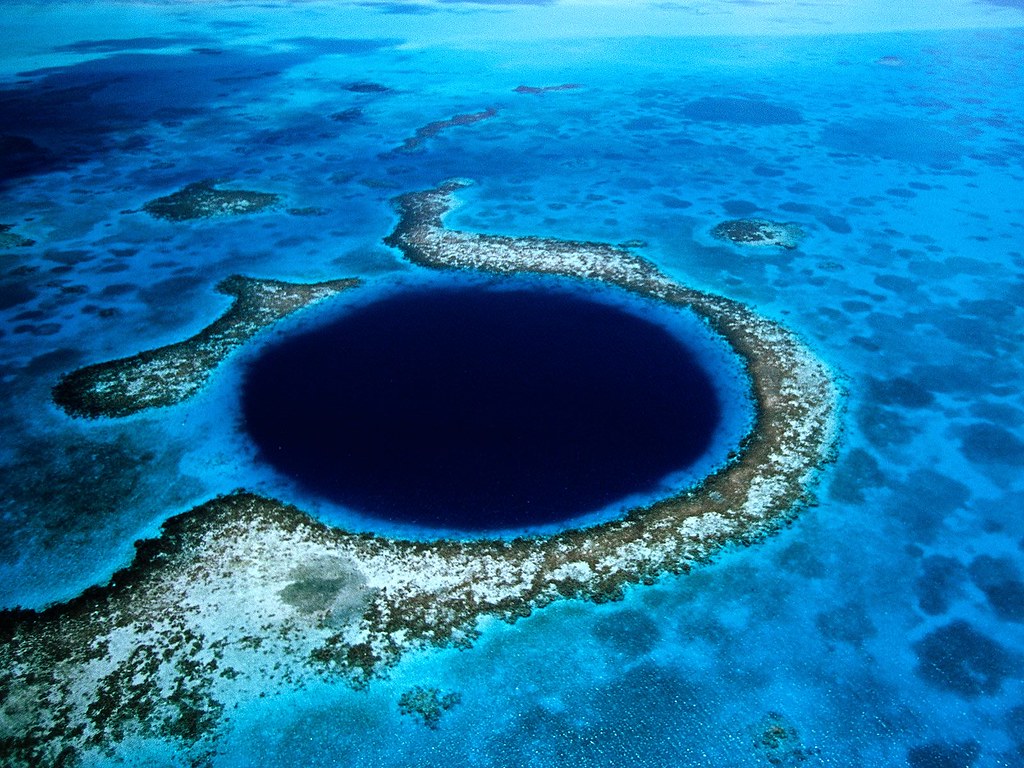
This is the so-called Blue Hole, technically a huge marine sinkhole located in the center of the Lighthouse Reef atoll: a limestone cave formed during the last ice age, when the sea level was much lower than today, subsequently flooded in conjunction with the rising of the waters until the roof collapsed on itself, creating a submerged collapse valley of a perfectly circular shape, a true jewel of nature.

Its peculiarities are much more evident if you look at it from above, especially since the color of the water inside it is a shade of blue much darker than the rest due to the depth, an aspect that escapes to those who ventures to its discovery by standing on the surface of the water.

Obviously, Unesco could not miss such an opportunity and in 1996 included it on the World Heritage List. Rightly so, according to those who have had the good fortune to be able to dive right inside: the side walls are almost vertical and are characterized by a very high number of stalactites even more than ten meters long, clear evidence of the times in which that area was located well above sea level.
This is not an experience open to every one, since snorkeling would not make sense: there is nothing at a depth of a couple of meters. To experience some strong sensation you have to go down a lot and pay great attention since the presence of numerous rocky elements still represents a danger for those who swim down there. Stuff that manages to overshadow the presence of numerous species of sharks among those waves.

But perhaps this is what makes the conquest even more fascinating.