It is called Ganh Da Dia and means, more or less, “cliff of stone slabs“: it is a large stretch of coast near An Ninh Dong, in the Vietnamese province of Phu Yen, characterized by the presence of 35 thousand columns of basalt rocks, the result of volcanic eruptions that thousands and thousands of years ago changed this spectacular stretch of sea forever.
In short, a sort of huge “Giant’s Causeway“, for those who have had the good fortune to admire a similar phenomenon in Northern Ireland: with the advantage, however, of having near the splendid beaches from which to admire the spectacle that nature has staged millions of years ago.
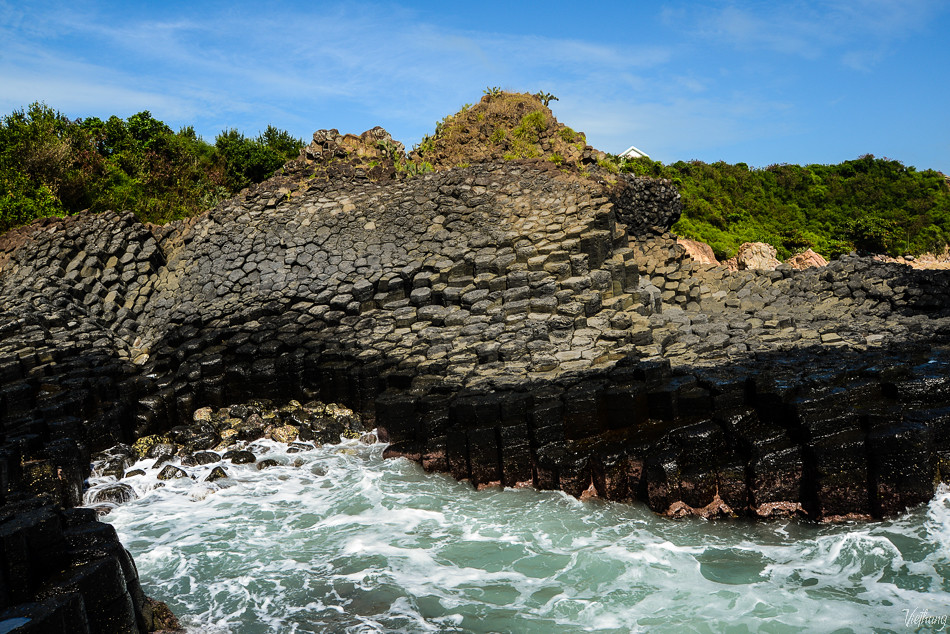
These are rock formations similar to hives in which each column, respecting the shapes imposed by the solidification of the lava, rises from 30 centimeters to two meters, helping to form a truly unique landscape. A kind of giant stone puzzle, which seems to have been composed by the patient hands of some giant. Of course, for its particular beauty, the place was recognized in 1998 as an element of the National Heritage, but unlike many other similar places, there is no reverence towards it by the local population, who continue to use those rocks geometrically perfect as a starting point for fishing boats or as a deposit for nets: a beach like any other, in short, where the traveler does not experience the usual feeling of being prey to greedy hunters, always ready to spot the tourist and rushing against them to place their trinkets.

Here the rock formations lend themselves very well to hosting the round boats with which fishermen reach the larger ones moored in the middle of the bay and the movement that can be observed in the area is that of a small community that carries out its daily activities without any interest for the exploitation of the landscape. Nearby there are splendid beaches where, obviously, the residents have taken steps to make the stay of visitors as easy as possible, obtaining the little that allows them to live in dignity.

The more adventurous also tell about the beauty of the journey to reach that stretch of coast, an itinerary that winds through an incredible wooden bridge, which can be traveled on foot or with bicycles or mopeds, as long as it is very very slowly: at first sight, it looks like a banal pier for the fishermen, but in reality, it connects two stretches of coast together, even if the locals are constantly busy working with nails and hammers to make the transit safe. The road then passes through tiny villages where it is possible to observe women at work in the rice fields or in the cornfields, a bucolic gash that anticipates the surprise of the basalt columns that suddenly open behind an inlet.

A successful mix, if you think about it, of the most fortunate landscape typologies of the Asian country, which owes the extraordinary fame it enjoys among travelers, especially Westerners, to the singularity of its countryside and the beauty of its coastline. The basalt giants, in the end, become the classic icing on a very tasty cake.